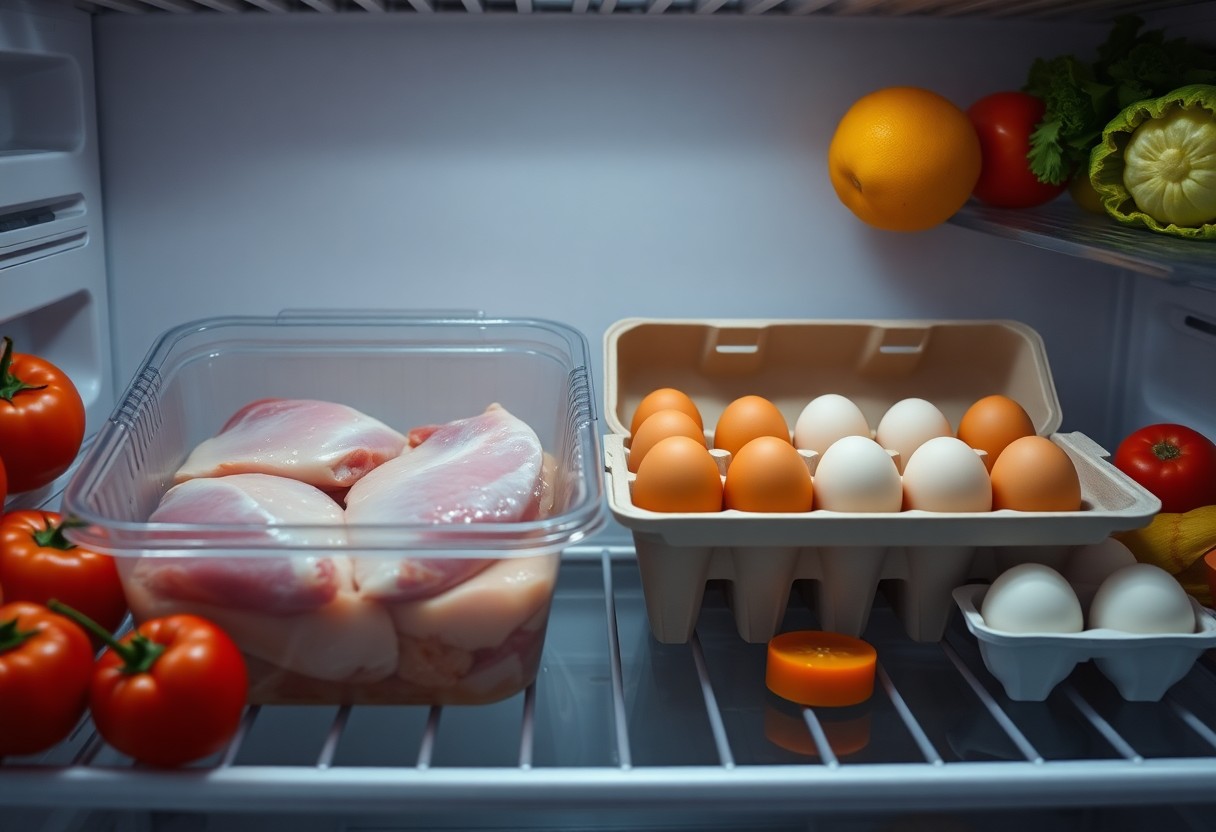
Many people overlook the importance of food storage in the refrigerator, which can lead to cross-contamination and spoilage. To keep your meals safe and fresh, it’s vital to separate items that could harm each other. Certain foods, like raw meat and ready-to-eat items, should never be on the same shelf; their juices can cause dangerous bacterial contamination. In this post, you’ll learn how to organize your fridge effectively, ensuring that each food type remains safe and delicious.
Key Takeaways:
- Raw meat and poultry should always be stored separately from ready-to-eat foods to prevent cross-contamination.
- Dairy products, especially milk, should not be stored near strong-smelling foods, as they can absorb odors and affect taste.
- Fruits and vegetables should be kept apart; fruits can produce ethylene gas, which can spoil vegetables faster.
The Perils of Cross-Contamination
Cross-contamination occurs when harmful bacteria from one food item transfer to another, often resulting in foodborne illnesses. Keeping raw meats on the same shelf as ready-to-eat foods is a prime example. You may inadvertently introduce pathogens like Salmonella or E. coli into your meals, risking your health. Proper storage practices help prevent these dangers. For further insights, check out 12 Foods You Should Never Refrigerate.
Understanding Bacterial Growth Dynamics
Bacteria thrive in environments that offer moisture, nutrients, and warmth, which are easily found in your refrigerator. Storing foods improperly allows bacteria to multiply rapidly, especially between 40°F and 140°F. This temperature range, known as the “danger zone,” can lead to rapid spoilage and increased risk of illness. Always check temperatures and keep your fridge organized to avoid bacterial growth.
Common Misconceptions About Food Safety
Myths surrounding food safety can jeopardize your health. One common misconception is that washing meat prevents bacteria from spreading; in fact, this can increase contamination risks. Another myth is that food stored for long periods can be deemed safe to eat if it looks and smells fine. Always adhere to safety guidelines and expiration dates, as bacteria are often invisible and odorless.
Dairy Products: More Than Just Milk and Cheese
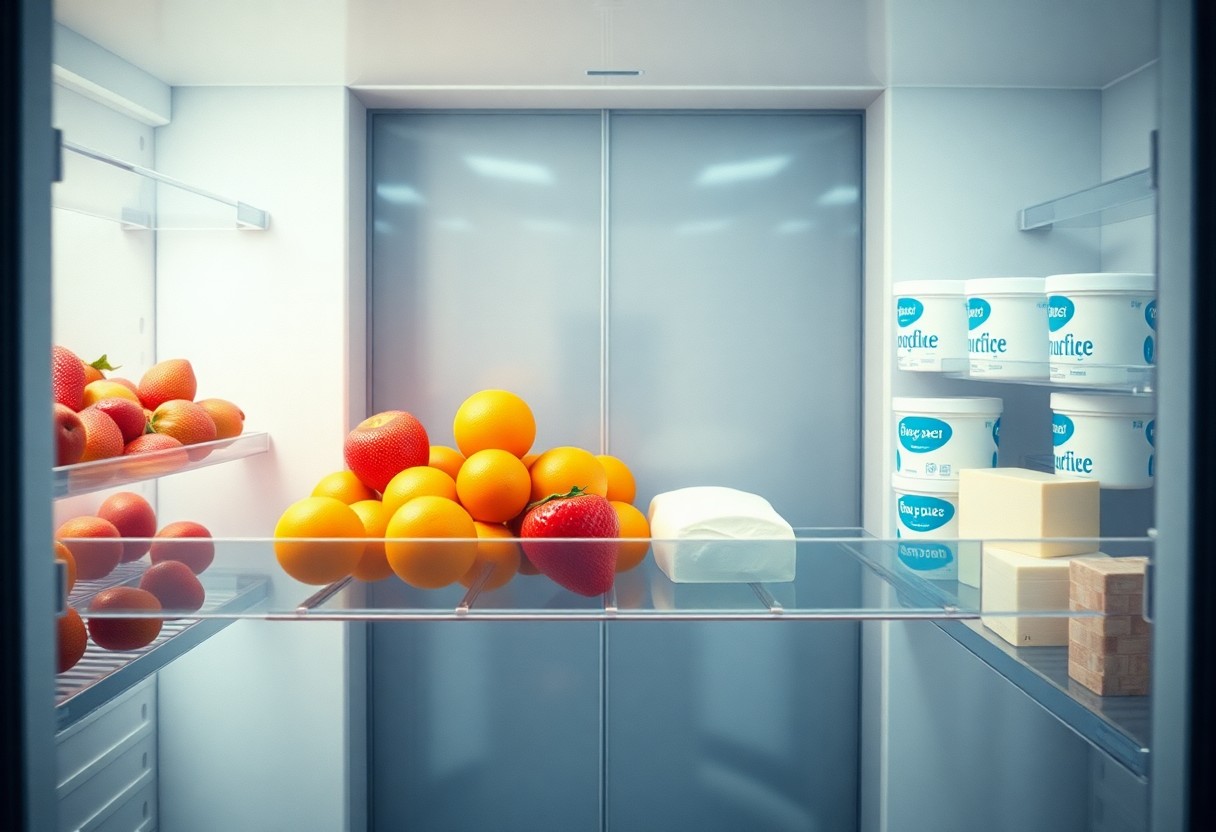
Dairy products encompass a wide range of foods beyond just milk and cheese, including yogurt, sour cream, and cream. These items can harbor harmful bacteria when stored near raw meats, leading to cross-contamination. In particular, the rich moisture in dairy allows pathogens to thrive, increasing foodborne illness risks. Proper storage practices are imperative to maintain not just safety, but also the flavor and texture of your dairy items, ensuring a delightful culinary experience.
The Dangerous Dance Between Dairy and Raw Proteins
Storing dairy products alongside raw proteins, such as meat or fish, creates a dangerous environment for food safety. Juices from raw proteins can easily contaminate dairy products, leading to the risk of foodborne illnesses like salmonella or listeria. This interaction can significantly decrease the freshness of your dairy, compromising both taste and health. Always keep these items on separate shelves, ideally with raw proteins on the bottom to prevent any potential drips.
How Fermentation Can Influence Freshness
Fermented dairy products like yogurt and kefir undergo transformations that enhance their shelf life and safety. Fermentation introduces beneficial bacteria, which helps to outcompete harmful microbes, promoting extended freshness and flavor complexity. The pH level drops during fermentation, creating an inhospitable environment for spoilage organisms. For instance, Greek yogurt can last weeks longer than fresh milk, demonstrating that the fermentation process not only improves taste but can also serve as a preservation technique against contaminants.
Fruits and Vegetables: When Juicy Meets Crunchy
Your refrigerator can become a battleground when juicy fruits and crunchy vegetables occupy the same shelf. Fruits like bananas, apples, and avocados emit ethylene gas, which accelerates ripening and can hasten decay of nearby veggies. Storing them together may lead to quicker spoilage, depriving you of the crispness that defines freshness.
Ethylene Gas Production and Its Impact
Certain fruits produce ethylene gas as they ripen, affecting nearby produce. For example, placing tomatoes near apples can result in overripe tomatoes within days, altering taste and texture. Keeping ethylene-sensitive vegetables such as carrots and broccoli away from ethylene-producing fruits helps maintain their quality and extends shelf life.
The Role of Moisture in Spoilage
Moisture content plays a significant role in spoilage processes. Fruits typically have higher water levels, making them more prone to mold growth and spoilage when in close contact with drier vegetables. High humidity environments foster bacteria and fungi, leading to quicker deterioration. Control moisture levels by using breathable produce bags and ensuring proper air circulation in your refrigerator.
To effectively manage moisture, storing fruits and vegetables in separate compartments is advisable. For instance, keep leafy greens in a low-humidity drawer to prevent wilting while allowing fruits to breathe properly. Avoid washing produce before storage, as excess moisture can encourage spoilage. By maintaining optimal humidity for each type, you contribute to longer-lasting freshness and minimize waste.
Meat and Seafood: The High-Stakes Shelf
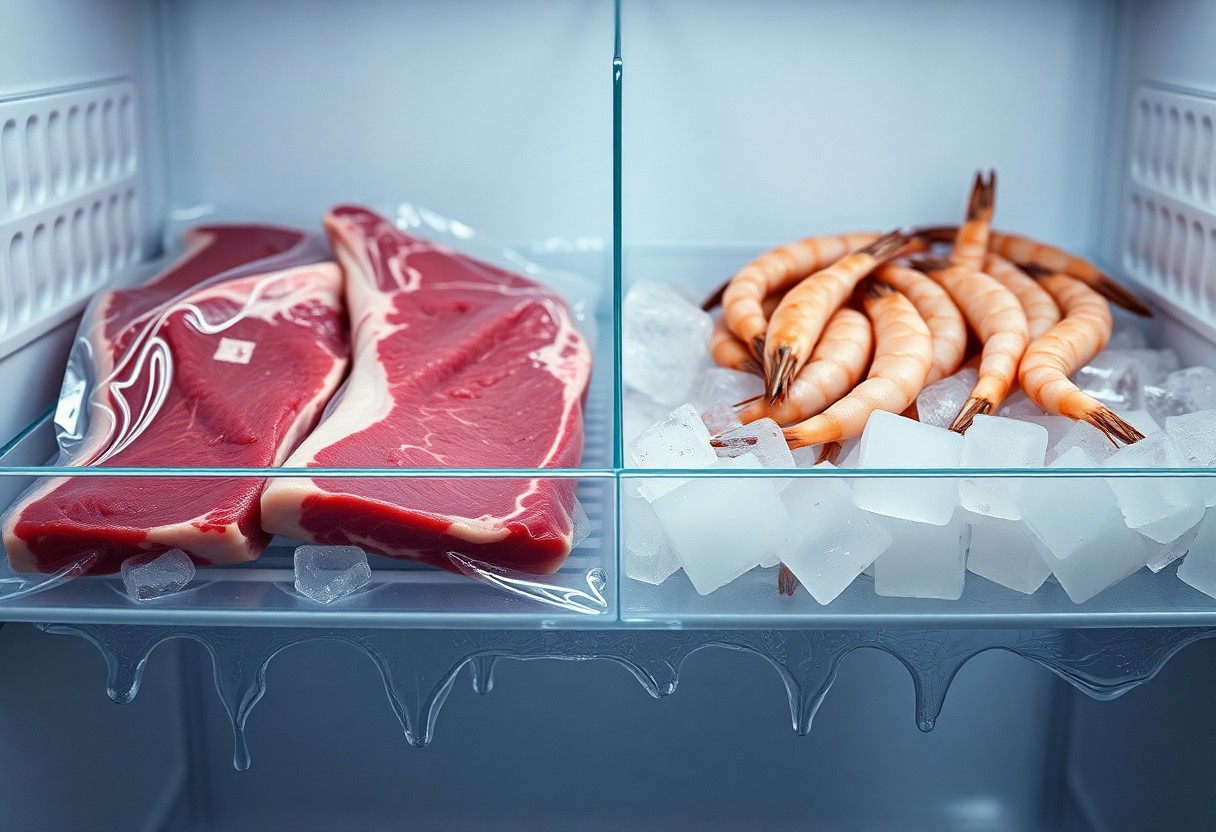
Combining meat and seafood in your refrigerator can create a hazardous zone for food safety. Pathogens like Salmonella and Listeria can thrive, threatening your health and leading to foodborne illnesses. Proper separation and storage techniques are vital to ensure both freshness and safety, preventing cross-contamination from these high-stakes ingredients.
The Importance of Temperature Regulation
Maintaining the right temperature is important for safe meat and seafood storage. The FDA recommends keeping your refrigerator at or below 40°F (4°C) to slow bacterial growth. Always use a refrigerator thermometer to ensure accuracy and prevent food safety risks.
Temperature Regulation
| Ideal Temperature for Meat | 32°F to 36°F (0°C to 2°C) |
| Ideal Temperature for Seafood | 30°F to 34°F (-1°C to 1°C) |
Signs of Spoilage That Can’t Be Ignored
Identifying spoilage in meat and seafood can be a matter of health. Indicators include off odors, a slimy texture, and discoloration. Always trust your senses; if something feels or smells “off,” it’s best to err on the side of caution and discard the item.
When assessing spoilage in meat and seafood, specific signs should never be overlooked. Fresh fish should have a clean, briny smell, while spoiled seafood emits a strong, unpleasant odor. For meat, vibrant color signifies freshness, while dull or grayish hues signal it’s time to throw it away. Additionally, a tacky or slimy surface is a definitive red flag. Trust your instincts; ignoring these signals could lead to serious illness.
Leftovers and Prepared Foods: A Recipe for Disaster
Improperly stored leftovers and prepared foods can be a breeding ground for harmful bacteria. Mixing different types of food together in the same container can lead to cross-contamination, compromising safety and increasing the risk of foodborne illnesses. For detailed insights on proper storage techniques, visit Storing Food on Fridge Shelves | What is the Correct Order?.
Storing Practices That Compromise Safety
Storing your leftovers in opaque containers or leaving them uncovered can hinder your ability to monitor freshness. Furthermore, placing prepared foods above raw items can allow drips and spills to contaminate what you’re planning to eat. It is necessary that you check expiration dates regularly and label food to avoid confusion.
Tips for Safe Reheating and Consumption
Before consuming leftovers, ensure they are reheated to an internal temperature of at least 165°F (74°C) to eliminate bacteria. Store prepared foods in airtight containers, allowing minimal airflow, and always cool them down to room temperature before refrigerating. These measures ensure you minimize risks associated with bacteria and toxins.
- Reheat leftovers to at least 165°F (74°C)
- Use airtight containers for storage
- Cool food to room temperature before refrigerating
- Check expiration dates regularly
- Any cross-contamination should be avoided
Maintain a clear plan for reheating food by checking each dish for visual signs of spoilage. Leftovers can pose risks if they have been in your fridge for over three to four days. An effective strategy is to set reminders for consumption timelines, ensuring your food remains safe and enjoyable.
- Store food for no longer than three to four days
- Reheat evenly to eliminate bacteria
- Consider freezing if not consumed in time
- Always label and date your leftovers
- Any unattended food risks contamination
Conclusion
To wrap up, it’s necessary for you to keep incompatible foods separate in your refrigerator to ensure food safety and maintain freshness. Raw meats, for example, should always be stored separately from fruits and vegetables to prevent cross-contamination. Dairy products and strong-smelling items should also have dedicated spaces to preserve their flavors and quality. By organizing your refrigerator wisely, you enhance the longevity and safety of your food, ultimately contributing to a healthier kitchen environment.
FAQ
Q: Why shouldn’t raw meat be stored near fruits and vegetables?
A: Raw meat can carry harmful bacteria that can contaminate fruits and vegetables, leading to foodborne illnesses.
Q: What happens when dairy products are stored next to strong-smelling foods?
A: Dairy products can absorb odors from strong-smelling foods like onions or garlic, affecting their taste and quality.
Q: Can I keep eggs on the same shelf as leftovers?
A: It’s best to keep eggs separate from leftovers to avoid cross-contamination from bacteria present in leftovers.
Q: Why is it not advisable to store seafood with dairy?
A: Seafood can have strong odors that may affect dairy products, and the combination can lead to spoilage issues.
Q: How does storing produce next to bread affect their freshness?
A: Produce releases moisture and ethylene gas that can quickly stale bread and reduce its shelf life.