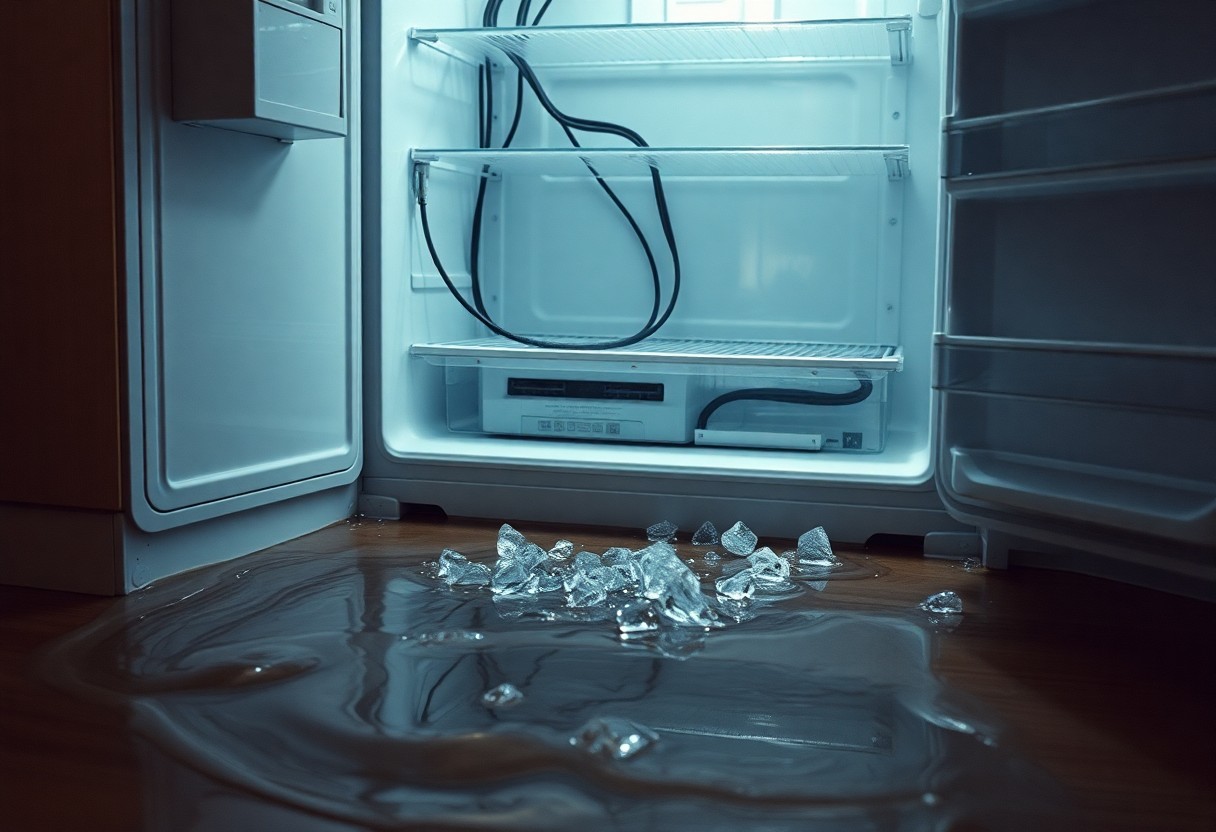
There’s a chance you’ve encountered water leaks inside your refrigerator, but the causes may not be what you think. While you might suspect a clogged drain or a faulty door seal, there are five unexpected reasons that could be contributing to your problem. Addressing these issues can save you from further damage to your appliance and keep your food safe. Dive into these unlikely culprits to ensure your fridge functions smoothly.
Key Takeaways:
- Blocked defrost drain can lead to water accumulation inside the fridge.
- Damaged door seals may allow warm air in, causing condensation and leaks.
- Improper temperature settings can result in excess frost melting and dripping inside the fridge.
The Unseen Threat of Clogged Defrost Drains
A clogged defrost drain can create significant issues inside your fridge, leading to unwanted water accumulation. Over time, debris, food particles, and ice can obstruct this drain, preventing proper water flow. This blockage may not be immediately apparent but can cause water to seep into the fridge compartment, potentially damaging your food and leading to mold growth.
How Ice Buildup Causes Access Water
Ice buildup in the defrost drain can trap water that should normally flow away, causing a backup that results in excess water pooling inside your fridge. As the frost melts during cyclical defrosting, the accumulated water has nowhere to go but into the refrigerator, creating a damp environment that can affect your food and appliance functionality.
Signs You’re Dealing with a Blockage
Spotting a defrost drain blockage requires vigilance; common signs include water pooling at the bottom of your fridge or visible ice forming around the vents. If you notice your foods are spoiled faster than usual or you experience a persistent musty odor, these may be indicators that your defrost drain is clogged.
In addition to pooling water and unpleasant odors, check for frost accumulation on the back wall of your refrigerator or freezer. If the appliance struggles to maintain a consistent temperature, that could signal a hidden blockage. Inspecting and addressing these warning signs promptly can prevent further damage and save you from costly repairs.
The Role of Door Seals in Temperature Regulation
| Function of Door Seals | Impact on Temperature |
|---|---|
| Prevents warm air from entering | Maintains consistent internal temperature |
| Reduces energy consumption | Improves efficiency of cooling system |
| Minimizes frost build-up | Reduces potential for leaks and condensation |
How Damaged Seals Lead to Unusual Condensation
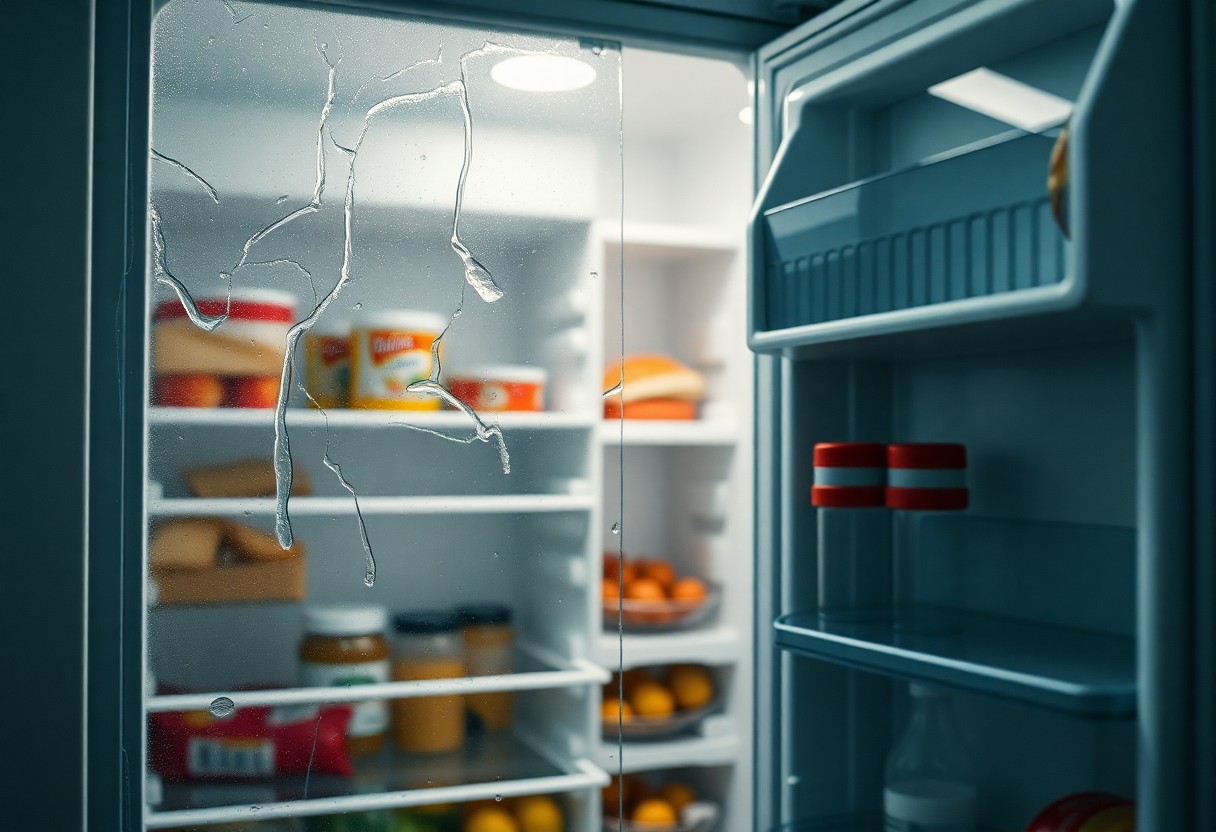
Damaged door seals allow warm air to infiltrate your fridge, disrupting the internal temperature balance. This warm air increases humidity levels, leading to unusual condensation on shelves and food items. The excess moisture can create a breeding ground for bacteria and mold, harming your food quality and creating an unsanitary environment.
Testing the Integrity of Your Fridge’s Seals
Assessing your fridge’s seals involves simple methods to identify significant issues. You can use a piece of paper or a dollar bill; if it slides out easily without resistance when the door is closed, your seals may be compromised.
Other tests include visual inspections for visible cracks or tears in the seals, as well as checking for gaps by closing the door on a flashlight or using water to see if it leaks through. Regular maintenance ensures that your fridge operates efficiently; hence, evaluating seals periodically can save money on energy costs and preserve the quality of your food. If you detect significant air leaks or damage, consider replacing the door seals to restore optimal performance.
Unlikely Sources: The Ice Maker Connection
Ice makers can become a hidden source of leaks if malfunctioning components go unnoticed. Issues such as clogged water lines, frozen fill tubes, and defective water valves can lead to excess moisture accumulation inside your fridge. You might not immediately associate these problems with leaks, but if your ice maker is not functioning correctly, you’re likely to see unexpected water pooling inside or around your appliance.
Malfunctions That Create Excess Water
Malfunctions in your ice maker can lead to water overflow. A common issue is a clogged water line, which can backflow and leak into the fridge compartment. Additionally, a frozen fill tube can prevent proper water flow, causing it to fracture and leak. Regular maintenance can help avert these malfunctions and ensure your ice maker operates smoothly.
Assessing the Link Between Ice Production and Leaks
Consider the ice production rate in your appliance—if it’s slower than usual, that’s a red flag. This inconsistency could suggest that water isn’t reaching the ice maker properly, potentially leading to water pooling elsewhere. Investigating your ice maker’s performance can reveal underlying issues like water valve failures or improper temperature settings, which directly contribute to water leaks.
If the ice production is irregular, it may indicate issues such as blocked water lines or a malfunctioning water inlet valve. For instance, a broken valve could lead to water continuously flowing into the tray, causing overflows. Checking the ice maker’s output consistency also allows you to pinpoint problems early, ensuring that small leaks don’t escalate into larger, more damaging issues. Regularly monitoring these components will help maintain both the integrity of your fridge and the efficiency of your ice maker.
Environmental Factors You May Overlook
Even the most diligent homeowners might overlook certain environmental factors contributing to water leaks in your fridge. Factors like ambient temperature, nearby heat sources, and high humidity can significantly affect your appliance’s function. For instance, placing your fridge too close to an oven or radiator can cause overheating, leading to excess condensation. Additionally, homes in areas with high moisture can see a rise in water accumulation. Thou, paying attention to these environmental elements can save you from unexpected leaks. For more insights, check out Why Is My Refrigerator Leaking Water? – Appliance Doctors.
Humidity Levels: Their Impact on Fridge Performance
High humidity levels in your home can lead to condensation inside your fridge, resulting in water pooling. Excess moisture not only increases the chance of leaks but can also affect food preservation. When the fridge works overtime to regulate temperatures in humid conditions, the internal components may fail, which exacerbates the leaking issue.
Placement of the Refrigerator: A Hidden Culprit
The position of your fridge can greatly influence its efficiency and lead to leaks. If it’s pushed against a wall or crammed into a tight space, airflow is restricted, causing the appliance to struggle to maintain optimal temperatures. This can cause condensation to build up and eventually leak.
Inadequate airflow around your refrigerator can create a host of performance issues. You should ensure that there’s sufficient space around all sides to allow for proper ventilation. Ideally, the back should have at least a couple of inches free from walls or cabinets. Fridges placed too close to other appliances can suffer overheating, leading to moisture accumulation and potential leaks. Even slight adjustments in placement can enhance its efficiency and restore proper functioning. Thou, consider the positioning to avoid future water issues.
When Electrical Components Fail
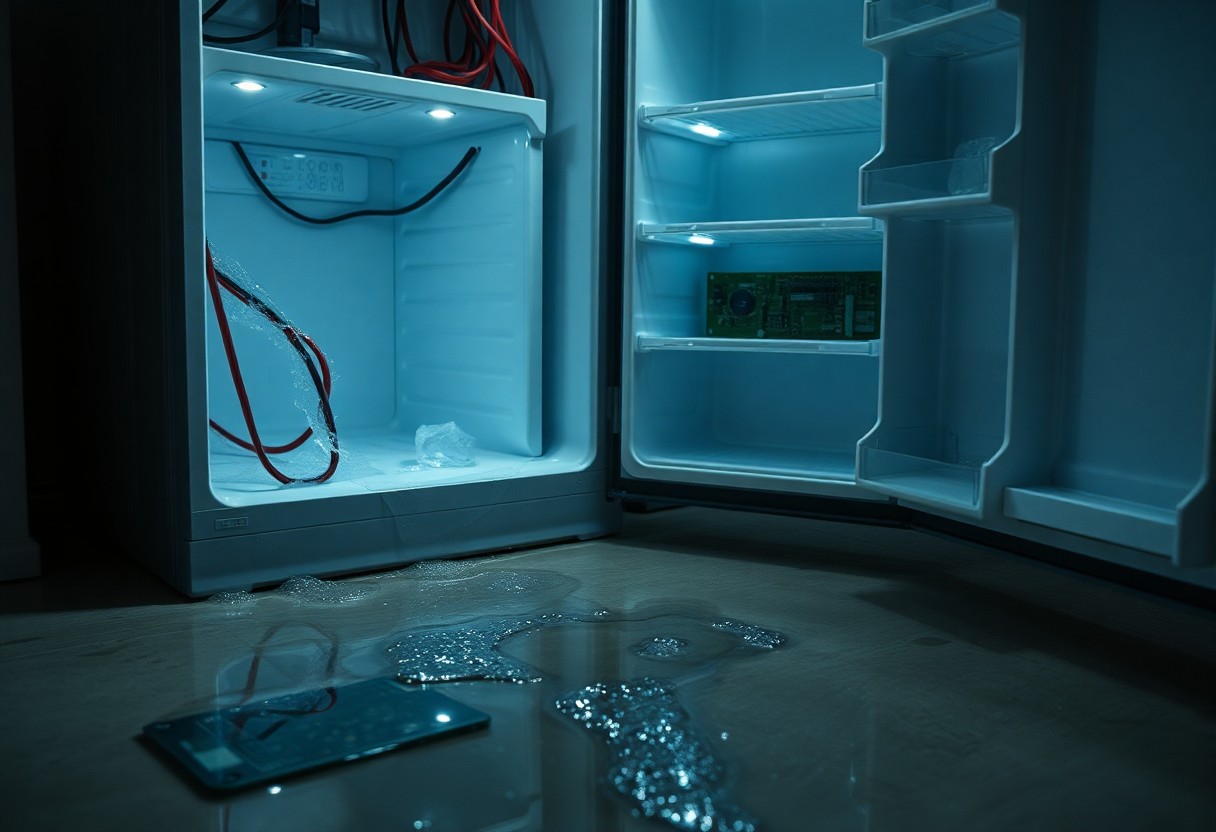
Electrical component failures can lead to unexpected leaks inside your fridge, disrupting its functionality. Components such as the compressor, defrost heater, and fan can both affect the cooling efficiency and lead to water accumulation. For instance, if the compressor is not cycling properly, it can cause frost build-up, which, when it melts, becomes excess water leaking onto your floor.
The Role of Thermostats in Temperature Control
Thermostats maintain your fridge’s internal temperature by regulating the compressor cycles. If your thermostat malfunctions, it can lead to improper cooling, causing condensation to form. This condensation can eventually drip and accumulate, leading to water pooling inside your refrigerator.
| Misreading Temperature | Causes overcooling and water accumulation. |
| Stuck Contacts | Prevents compressor from shutting off, leading to frost melting. |
How Sensor Malfunctions Can Create Dampness
Sensor malfunctions can lead to improper temperature regulation, creating a breeding ground for excess moisture. For example, a faulty temperature sensor may fail to detect warming inside the fridge, leading to excess condensation as the unit works harder than necessary to cool down, ultimately resulting in leaks.
Faulty sensors can skew readings by several degrees, which can lead to persistent dampness in various forms. For instance, if the temperature sensor underestimates the actual temperature, the compressor continues to run excessively, producing unnecessary frost in colder areas. This ice will eventually melt, contributing to water pooling issues. Regular maintenance checks on these sensors can help you avoid these soggy situations and ensure consistent cooling performance.
Conclusion
Considering all points, understanding the unlikely causes of water leaks inside your fridge can help you maintain its efficiency and prevent potential damage. You may not have considered factors like door seals, defrost drain blockages, or even humidity levels in your kitchen. By addressing these issues proactively, you can enhance the longevity of your appliance and safeguard your food storage. Staying informed empowers you to take action and ensure your fridge operates smoothly.
FAQ
Q: What causes water to leak from the fridge when the door is closed?
A: This can occur due to a clogged defrost drain, which collects excess water during the defrost cycle. If blocked, water can accumulate and leak inside the fridge.
Q: How does the door seal affect water leaks?
A: A damaged or dirty door seal can allow warm air to enter the fridge, causing condensation and water to form. Regularly cleaning and checking the seal can prevent this issue.
Q: Can a malfunctioning ice maker lead to leaks?
A: Yes, if the ice maker has a faulty water line or is not properly aligned, it can leak water inside the fridge. Inspecting and adjusting the ice maker setup may resolve this problem.
Q: What role does the temperature play in fridge leaks?
A: An improperly set thermostat can cause freezing, leading to excess water as ice melts. Ensuring the fridge temperature is maintained at the proper setting can help mitigate leaks.
Q: Are there external factors that can contribute to water leaks in the fridge?
A: Yes, high humidity levels in the environment can cause condensation inside the fridge, leading to water accumulation. Using a dehumidifier in humid conditions can help manage this.