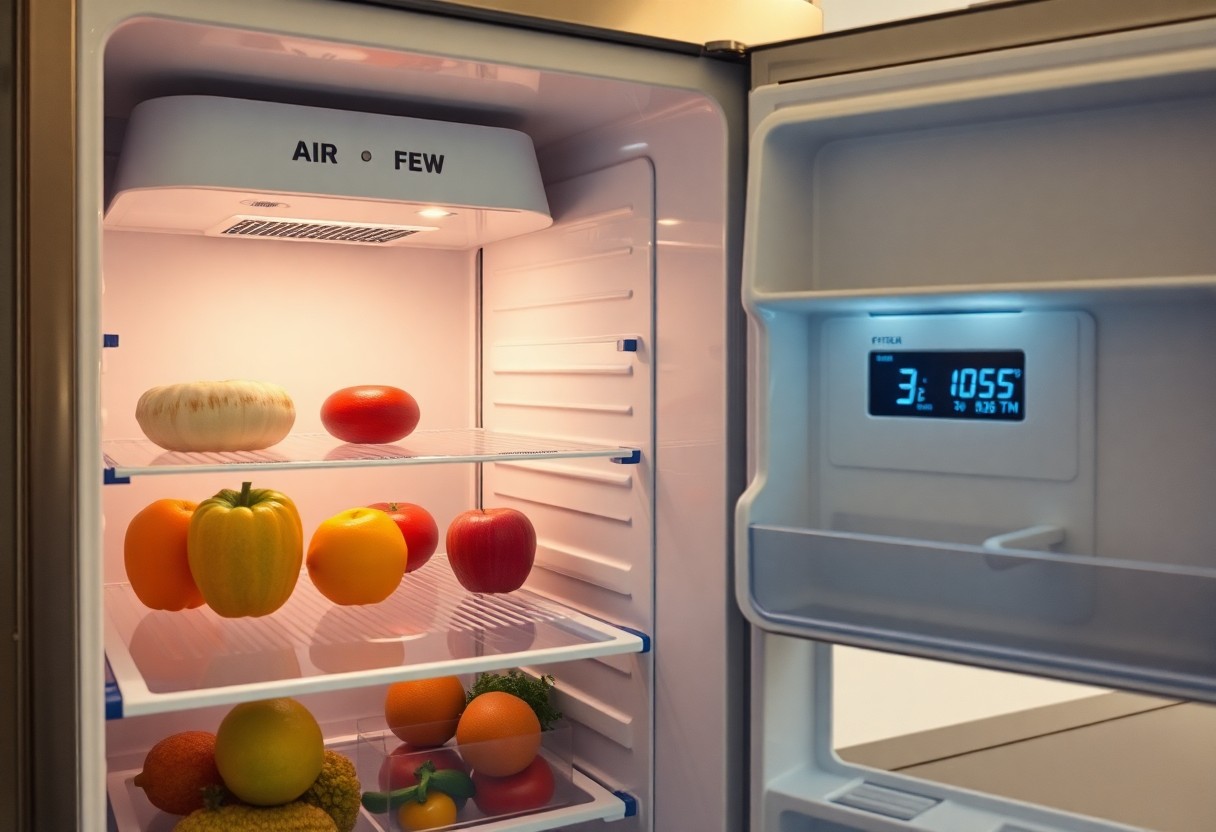
Just understanding how fridge airflow impacts your food can save you money and reduce waste. Proper airflow ensures an even distribution of cold air, which prevents certain areas from becoming too warm, leading to spoiled food and unwanted bacteria growth. By optimizing your fridge’s airflow, you can extend the freshness of your groceries and enjoy a healthier diet. Simple adjustments like not overcrowding and using the right storage containers can make a significant difference in preserving food for longer periods.
Key Takeaways:
- Proper fridge airflow extends food freshness by ensuring optimal temperature distribution.
- Avoid overcrowding to enhance air circulation and prevent spoilage.
- Regular maintenance, like cleaning coils and checking seals, improves fridge efficiency and food preservation.
The Physics of Refrigeration: How Airflow Works
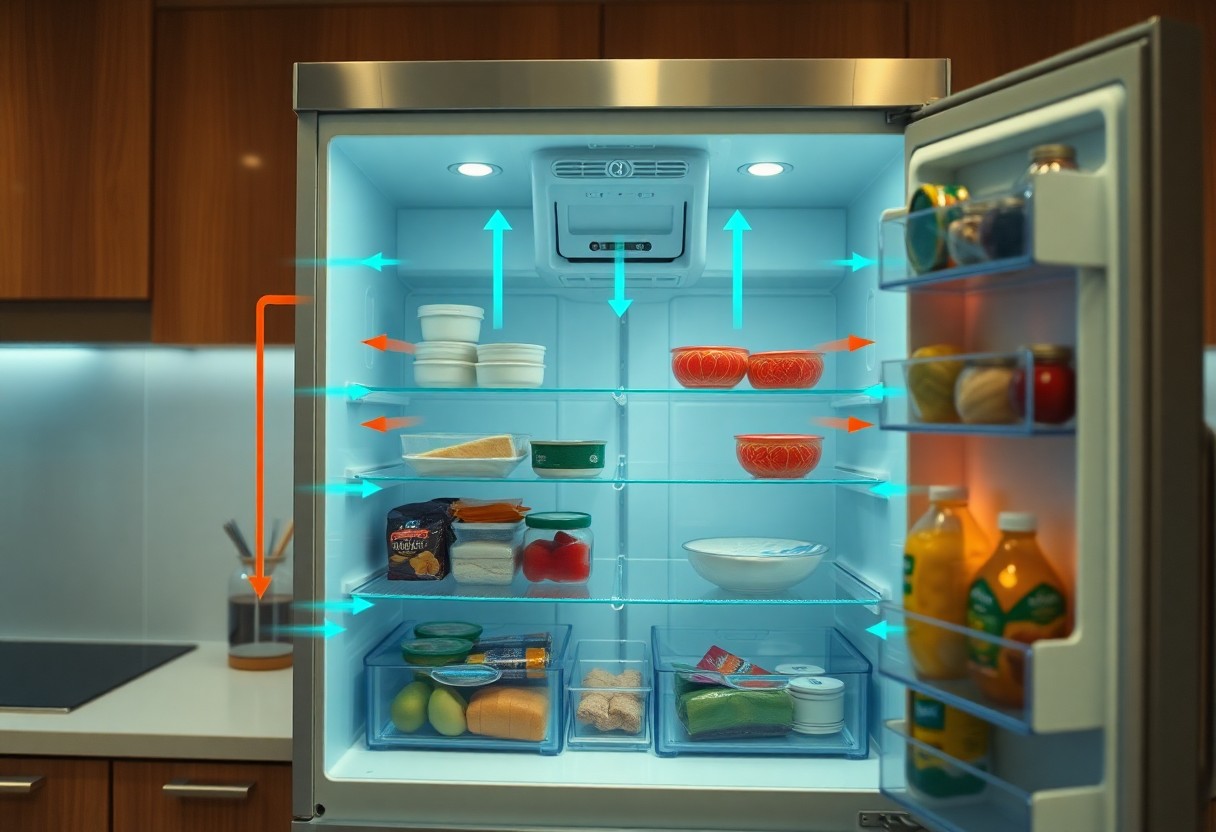
Airflow is fundamental to refrigeration, dictating how cold air circulates and maintains an even temperature throughout your fridge. When cold air moves freely, it efficiently cools items, minimizing hotspots that could lead to spoilage. Understanding the dynamics of airflow allows you to optimize your fridge’s layout for improved performance and longer food longevity.
The Role of Temperature and Pressure
Temperature and pressure within your fridge determine the refrigeration cycle’s effectiveness. The compressor raises pressure, causing a gas to release heat, leading to cooler temperatures as the gas expands and absorbs heat inside. Proper balance ensures optimal cooling performance, preventing premature spoilage.
| Temperature | Lower temperatures slow bacterial growth, preserving food. |
| Pressure | Higher pressure can increase cooling efficiency but may require a more robust system. |
The Impact of Air Circulation on Food Preservation
Effective air circulation enhances food preservation by maintaining consistent temperatures and reducing moisture buildup. Stagnant air leads to uneven cooling, resulting in some items spoiling faster than others. Ensuring proper airflow prevents localized warming, which can be detrimental to perishable goods.
Well-circulated air helps to evenly distribute cold temperatures, reducing the chances of hotspots that can accelerate spoilage. For instance, in a fridge with poor airflow, fruits might spoil at a different rate than dairy or meats due to varying cooling efficiency. By positioning items strategically and ensuring vents are unobstructed, you maximize cold air flow, creating an environment that significantly extends the freshness of your food—ultimately resulting in less waste and more savings.
Common Fridge Myths: Debunking Popular Misconceptions
Many misconceptions about refrigerator use lead to improper practices that can harm your food or waste energy. A better understanding of these myths helps you optimize both food preservation and energy efficiency in your kitchen. If you’ve ever wondered about the impact of leaving your fridge door open or where to store certain foods, the following insights will clarify these common beliefs and enhance your refrigerator management.
Does Leaving the Door Open Really Waste Energy?
Leaving the fridge door open does waste energy, but the extent depends on various factors like the duration and ambient temperature. Each second the door remains ajar allows warm air to enter, prompting the compressor to work harder to restore the desired temperature, wasting up to 50% more energy if prolonged. Aim to minimize door openings for better efficiency.
Are Some Compartments Better for Certain Foods?
Different compartments in your fridge are designed to optimize food storage by maintaining specific temperatures and humidity levels. For example, the crisper drawers usually provide higher humidity, ideal for fruits and vegetables, while shelves may offer a drier environment better suited for dairy or leftovers. Understanding these design features can enhance the freshness and lifespan of your perishables.
Fridge Compartment Guide
| Food Type | Ideal Fridge Compartment |
|---|---|
| Fruits | Crisper Drawer (high humidity) |
| Vegetables | Crisper Drawer (high humidity) |
| Dairy | Middle Shelves (consistent temperature) |
| Leftovers | Middle Shelves (consistent temperature) |
| Meat | Bottom Shelf (coldest area) |
Optimizing food placement according to fridge compartments can profoundly impact the shelf life of your groceries. Fruits should be placed in the crisper drawers, which maintain higher humidity, preventing them from wilting too quickly. Vegetables benefit from the same environment, while dairy products are best stored in the middle shelves, where temperatures are steady. For raw meats, the bottom shelf is the coldest part, reducing the risk of cross-contamination. By strategically organizing your fridge, you ensure that your food stays fresher for longer.
Food Storage Strategies
| Food Type | Storage Recommendations |
|---|---|
| Eggs | Middle Shelves (original carton) |
| Fish | Ice bath in bottom drawer |
| Herbs | Crisper drawer (wrapped in a damp paper towel) |
| Beverages | Door shelves (less temperature fluctuation) |
| Pasta sauce | Middle or Top Shelf (after opening) |
Designing Your Fridge for Optimal Food Lifespan
Maximizing food freshness requires thoughtful design and organization within your fridge. Specific placement of items and understanding airflow dynamics can significantly extend the longevity of your perishables. Creating a system that optimally harnesses the cooling capabilities helps you effectively prolong food lifespan, reducing waste and saving money.
Strategic Placement of Items for Ideal Airflow
Placing items correctly ensures that cold air circulates efficiently. Store raw meats on the bottom shelf to minimize cross-contamination, while fruits and vegetables belong in designated crisper drawers that control humidity. Group similar items together, allowing consistent temperatures for better preservation.
The Importance of Keeping It Full But Not Overstuffed
A refrigerator performs best when it maintains a consistent temperature, which is easier to achieve when it’s filled adequately. Ideally, keep your fridge about three-quarters full, providing enough food to facilitate temperature stability while allowing for proper airflow. An overcrowded fridge leads to hot spots and inefficient cooling, significantly shortening the lifespan of your stored items.
Overstuffing your fridge disrupts the airflow needed to maintain even temperatures. Cold air struggles to circulate around tightly packed items, leading to uneven cooling that can spoil perishable goods more quickly. For example, a study found that the most common reason for food spoilage in overstocked refrigerators is the formation of warmer zones, which can drop the shelf life of delicate items like dairy by up to 50%. Striking the right balance between keeping your fridge adequately stocked while ensuring space for air movement is vital for optimizing food preservation and minimizing waste.
The Dangers of Temperature Fluctuations
| Temperature Stability | A consistent temperature between 35°F to 38°F (1.7°C to 3.3°C) is optimal for preserving food quality. |
| Microbial Growth | Fluctuations above 40°F (4.4°C) can promote rapid bacterial growth, risking foodborne illnesses. |
| Food Quality | Frequent temperature changes can lead to texture and flavor degradation. |
Identifying and Mitigating Hot Spots
Hot spots occur in refrigerators due to uneven airflow, leading to localized temperature rises. To identify them, use a refrigerator thermometer to monitor specific areas, especially near the back and in corners. Placing food away from the vents and regularly checking airflow can help mitigate these hot spots, ensuring even cooling throughout.
Understanding the Risks of Frequent Door Opening
Every time you open the refrigerator door, cold air escapes while warmer air enters, causing unavoidable temperature fluctuations. Frequent openings can raise the internal temperature above 40°F (4.4°C), fostering a breeding ground for bacteria and compromising food freshness. Keeping the door closed and organized reduces the frequency of openings.
Each door opening can raise the temperature inside your fridge by several degrees, risking your food safety. With every second your fridge door is open, the internal temperature can increase and take time to stabilize again. Organizing your fridge for efficiency, planning quick access to needed items, and keeping track of how often the door is opened can significantly reduce these risks, preserving the longevity and safety of your perishable goods.
Innovations in Refrigeration Technology
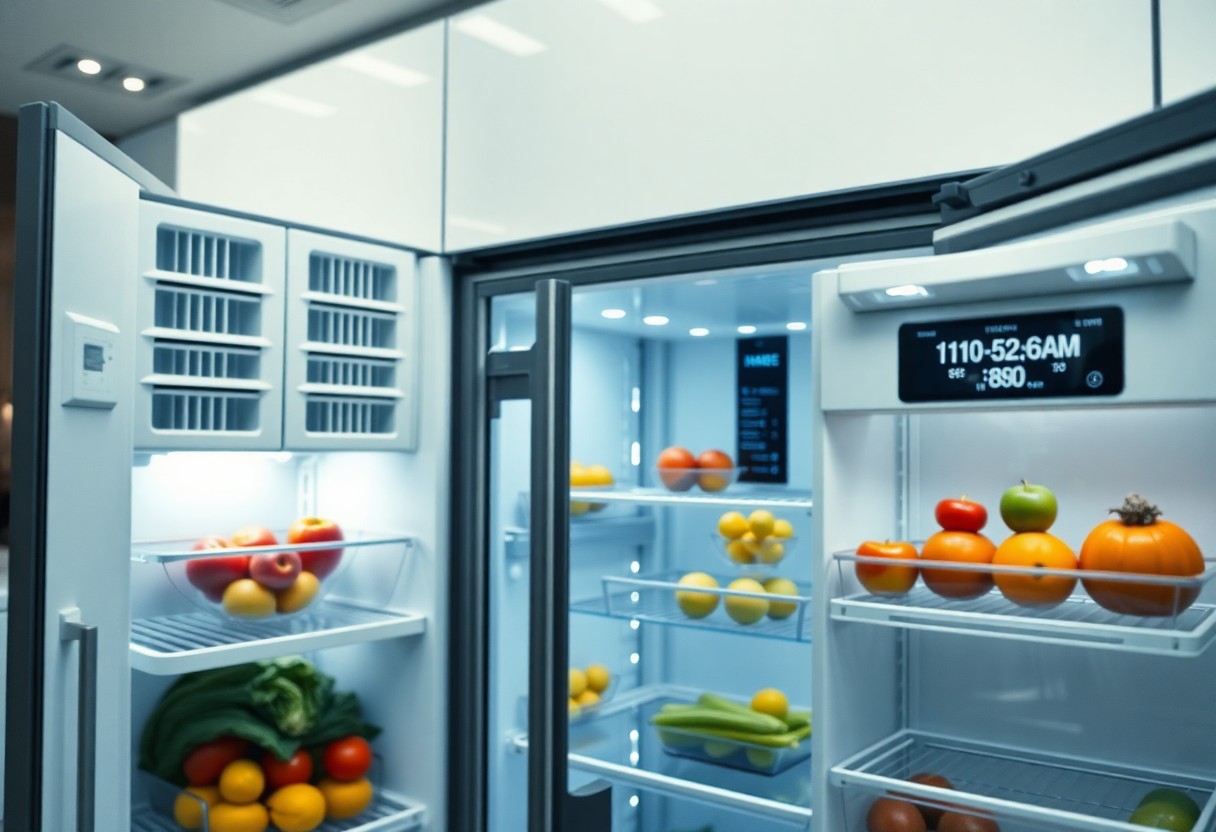
The latest advancements in refrigeration technology are shaping how we store food and maintain its freshness. Enhanced airflow systems, improved insulation materials, and energy-efficient compressors not only optimize energy use but also significantly reduce the risks of Food Spoilage: Is Your Refrigerator the Problem? By harnessing these innovations, you can prolong your food’s shelf life and enjoy fresher ingredients.
Smart Features and Their Impact on Food Freshness
Smart refrigerators equipped with Wi-Fi connectivity and sensor technology can monitor temperatures and humidity levels, adjusting settings to enhance food preservation. You benefit from features like automatic notifications for temperature irregularities and reminders for expiration dates, ensuring your food stays fresh longer.
Future Trends in Eco-Friendly Refrigeration Solutions
Emerging trends in eco-friendly refrigeration focus on sustainable materials, natural refrigerants, and decreased energy consumption. Innovations such as solar-powered units and improved heat exchange systems are being developed to lower environmental impact while maintaining efficiency, allowing you to be more environmentally conscious in your food storage practices.
As consumer awareness of environmental issues grows, manufacturers are prioritizing eco-friendly solutions. For instance, ammonia and carbon dioxide are being utilized as natural refrigerants, which have a lower global warming potential compared to traditional refrigerants. Furthermore, advancements in energy efficiency standards aim to reduce household energy use, ultimately translating to lower utility bills for you. Expect to see a rise in smart technologies that optimize energy consumption, allowing for responsible refrigeration without sacrificing performance.
To wrap up
With these considerations, you can significantly enhance the airflow in your fridge, leading to better temperature regulation and prolonged freshness of your food. By organizing your items to allow for unobstructed air circulation, you minimize hotspots and spoilage. Regularly cleaning the condenser coils and ensuring proper seal integrity also play a vital role in maintaining optimal fridge performance. Implementing these strategies not only safeguards your groceries but helps you reduce waste and maximize the value of your food supply.
FAQ
Q: How does fridge airflow affect food preservation?
A: Proper airflow helps maintain an even temperature throughout the fridge, preventing hot spots that can lead to premature spoilage of food.
Q: What are the common airflow problems in refrigerators?
A: Common issues include blocked vents, overcrowding, and improper placement of items that restrict airflow, which can create temperature inconsistencies.
Q: How can I optimize airflow in my fridge?
A: Ensure vents are unobstructed, avoid overpacking, and organize food items to allow air to circulate freely for optimal cooling.
Q: Does the location of my fridge affect its airflow?
A: Yes, placing the fridge too close to walls or other appliances can restrict airflow. It should have adequate space around it for ventilation.
Q: What impact does airflow have on different food types?
A: Airflow affects moisture levels, which can influence the longevity of various foods. For instance, fruits and vegetables need different humidity levels, impacted by airflow patterns.