
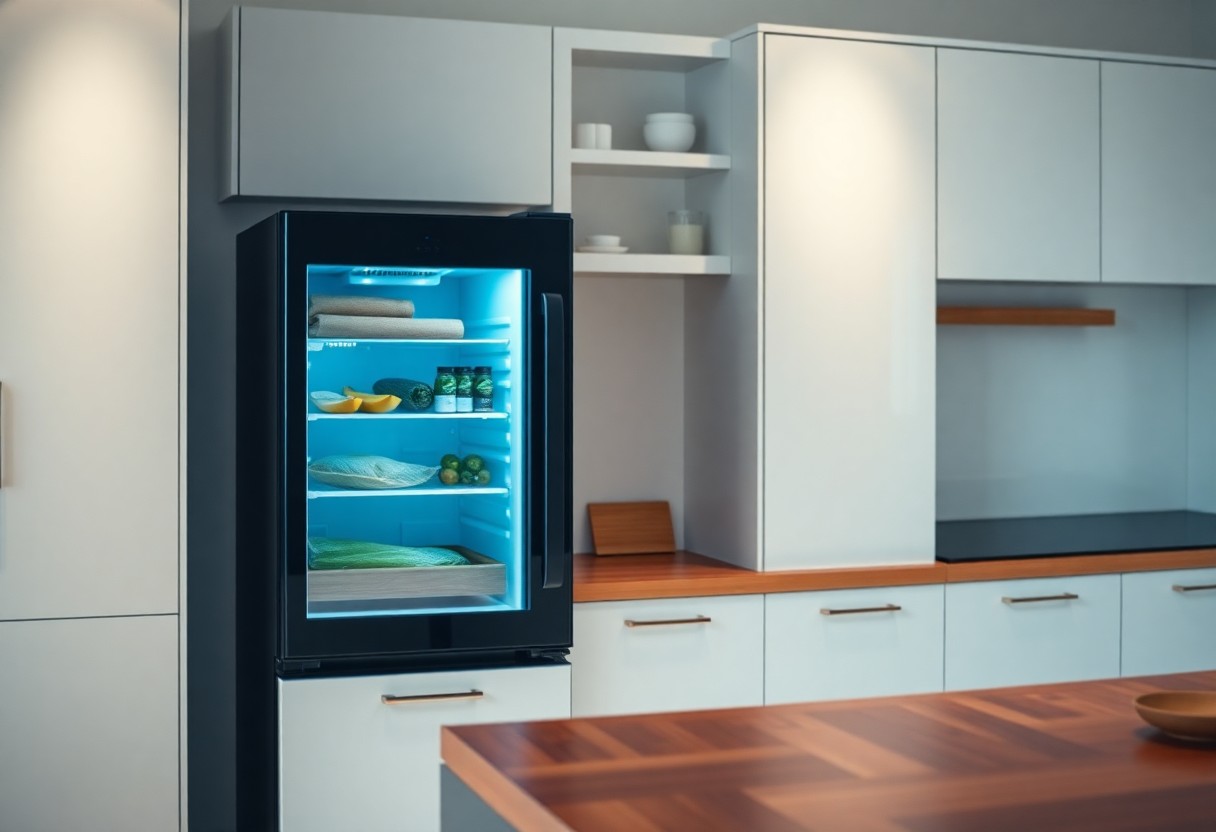
Minimalism encourages you to evaluate your possessions, including your refrigerator. You may find that large fridges often waste energy and take up unnecessary space in your kitchen. By embracing a more compact model, you can enhance your kitchen’s functionality and style while reducing clutter. Consider whether all that space is truly necessary for your lifestyle, and explore options that suit your needs better. If you’re struggling to find room, check out No Space For a Fridge in Your Kitchen? Here’s a Solution for inspiration.
Key Takeaways:
- A minimalist refrigerator focuses on efficiency, reducing unnecessary space and excess items.
- Choosing a smaller model can lead to mindful consumption and less food waste.
- Prioritizing vital items can enhance organization and ease of access in daily meal preparation.
The Case for Downsizing: Why Bigger Isn’t Necessarily Better
Opting for a smaller refrigerator can simplify your life while promoting sustainability. Less space often encourages you to make mindful purchases, reducing food waste and the need for excessive stocking. A compact unit forces you to prioritize necessarys, leading to healthier choices and a more organized kitchen. As urban living grows and minimalism becomes a lifestyle choice, reconsidering the size of your refrigerator may not only benefit your household but also align with broader environmental goals.
The Environmental Footprint of Large Refrigerators
Large refrigerators contribute significantly to environmental degradation through increased resource consumption and waste. Manufacturing these appliances requires more raw materials, while their bulkier size often results in higher transportation emissions. Additionally, a larger unit typically contains more refrigerants, increasing the potential for harmful leaks that can exacerbate climate change. Downsizing can mitigate these issues and promote more sustainable living practices.
How Size Impacts Energy Consumption
Your refrigerator’s size directly correlates with its energy consumption. Larger appliances tend to use more electricity due to their increased volume and cooling capacity. For example, a typical 25-cubic-foot refrigerator can consume around 700 kWh per year, while a smaller, 16-cubic-foot model might only use about 400 kWh. This difference not only affects your monthly utility bills but also your overall carbon footprint, emphasizing the potential benefits of choosing a smaller, energy-efficient model.
In practice, the energy efficiency of refrigerators usually depends on their size and age. Newer models, even those that are larger, often come with advanced energy-saving technologies, but they still use more power than their smaller counterparts. If you calculate the long-term operating costs alongside the purchase price, a compact fridge might save you hundreds over its lifespan. Additionally, supporting Energy Star-rated appliances can further lower energy use, aligning your choices with a greener lifestyle.
Rethinking Your Food Storage: Essentials vs. Extras
Embracing a minimalist approach to your refrigerator means distinguishing between what you genuinely need and what merely takes up space. Focus on versatile ingredients that contribute to multiple meals and eliminate those seldom-used items that clutter your fridge. Aim for a collection of items that support a healthy, varied diet while avoiding the temptation to stock up on extras that lead to waste and disorganization.
Identifying Your Core Needs
Begin by assessing your weekly meal plans and dietary preferences. Make a list of key ingredients that form the backbone of your meals, such as fresh vegetables, proteins, and whole grains. Keep only those items that are regularly used, ensuring your refrigerator is stocked with importants that facilitate easy meal preparation and reduce the likelihood of forgotten items rotting away.
Strategies for Efficiently Managing Inventory
Efficient inventory management involves several strategies to keep your refrigerator organized and functional. Start with a weekly inventory check; rotate items by expiration date and create a designated area for perishable items. Implement a visual system, like labels or color-coded containers, to quickly identify importants. A digital app can also help track items and alert you when stocks are low or nearing expiration, reducing waste while ensuring you maintain necessary supplies.
Incorporating inventory management strategies not only maximizes your refrigerator space but also promotes mindful consumption. Consider using a whiteboard or notepad on your fridge to jot down items as they run low or expire. This visual reminder keeps your focus on importants, allowing you to plan meals effectively and minimize over-purchasing. By establishing a routine of checking and updating your inventory, you’re more likely to maintain a streamlined fridge that reflects your true culinary needs.
Innovative Solutions for Small Spaces: Beyond the Traditional Fridge
Exploring alternatives to traditional refrigerators can significantly enhance your kitchen’s efficiency. Compact appliances, such as mini-fridges or under-counter cooling units, provide important storage without overwhelming your space. You can also opt for combination units that incorporate freezers and refrigerators, optimizing every inch while addressing diverse food storage needs. Furthermore, innovative cooling technologies like thermoelectric systems and absorption fridges offer energy-efficient options tailored for smaller living environments, ensuring you maximize functionality.
Alternative Refrigeration Technologies
Modern alternatives to conventional refrigerators include thermoelectric and absorption technologies, which utilize less energy and generate minimal noise. These systems are perfect for limited spaces, as they often eliminate the need for extensive compressor setups. For instance, thermoelectric coolers can fit neatly on countertops and operate silently, making them ideal for small apartments.
Smart Storage Ideas for Limited Space
In small kitchens, maximizing storage is important. Using modular storage solutions, such as stackable containers or pull-out drawers, can help you organize food more efficiently. Vertical storage options, like wall-mounted shelves, can hold spices and frequently used items, freeing up crucial refrigeration space. Applying the principle of “first-in, first-out” will ensure that your food is consumed before expiration, while clear bins make it easy to find what you need quickly.
Implementing smart storage strategies can transform limited refrigerator space into an organized haven. Opt for clear, labeled containers to keep track of the food items and their freshness easily. Consider tiered racks to elevate smaller items, making them visible and accessible. Utilizing door compartments for condiments and beverages allows you to better optimize the main shelves. Adopting these methods not only enhances your space but also simplifies your cooking and shopping routines.
The Financial Benefits of a Minimalist Fridge
Cost Savings on Purchase and Energy Bills
Selecting a minimalist refrigerator often leads to significant cost savings both at the point of purchase and over time. Smaller models generally come with a lower price tag, allowing you to invest in a high-quality appliance without breaking the bank. Additionally, these fridges are typically designed to be more energy-efficient, resulting in lower energy bills. For instance, Energy Star-rated refrigerators can save you up to $200 over their lifespan compared to less efficient models.
Long-Term Impacts on Food Waste and Budgeting
A minimalist fridge directly influences your food waste and budgeting strategies. By buying only what you need, you reduce the chances of items expiring before use. This conscious purchasing leads to better meal planning, which can streamline your shopping habits and result in substantial savings over time. Research suggests households that track their food purchases can save over 20% on their grocery bills.
Focusing on a minimalist refrigerator encourages you to curate your grocery list, ensuring you purchase only imperatives. You’ll likely find that with a well-managed fridge, the frequency of throwing away spoiled food diminishes. For example, families that commit to a minimalist approach often report savings of up to $1,500 annually simply by reducing food waste and practicing more intentional buying habits. A thoughtful approach to what fills your fridge contributes to better financial health and less stress during grocery shopping.

The Psychological Shift: Embracing Minimalism in Your Kitchen
Transitioning to a minimalist kitchen can ignite a profound psychological shift. With fewer items vying for your attention, you cultivate clarity, allowing creativity and organization to flourish. This newfound focus streamlines decision-making, reduces stress, and promotes a more intentional relationship with food, enhancing both your cooking and eating experiences.
The Freedom in Simplifying Choices
Embracing a minimalist kitchen grants you the freedom to simplify your choices. By narrowing down your cooking tools and ingredients, you eliminate overwhelming options and streamline meal prep. This not only saves time but also fosters confidence in your culinary skills, enabling you to focus on quality over quantity.
Building Mindful Cooking and Eating Habits
Minimalism encourages you to build mindful cooking and eating habits that enhance your overall well-being. With fewer distractions, you can connect deeply with the cooking process, savor every bite, and truly appreciate the nourishment you provide to your body. Kitchen rituals become more meaningful, elevating the simple act of preparing a meal into a cherished activity.
Fostering mindful cooking habits involves selecting fresh, seasonal ingredients and prioritizing simplicity in recipes. With a focus on a smaller selection of versatile ingredients, you can experiment with techniques and flavors, all the while cultivating a deeper understanding of food’s role in your life. Engaging in activities like meal planning and preparing ingredients in advance enhances your connection to the food you eat, transforming every meal into a mindful experience that nourishes both body and mind.
Summing up
Conclusively, adopting a minimalist approach to refrigerators can significantly streamline your kitchen experience. You may find that you need less space than you initially thought, allowing for easier organization and reduced food waste. By evaluating your storage habits and making intentional choices about what you keep, you can maximize efficiency and enhance your cooking experience. For insights on optimizing your fridge space, check out this video on Why You Shouldn’t Store Items on Top of Your Fridge.
FAQ
Q: What is a minimalist approach to refrigerators?
A: A minimalist approach to refrigerators emphasizes reducing excess space and items, focusing on necessary food and beverage storage. It encourages intentional purchasing and prioritizing simplicity in food organization.
Q: How can I determine the right size refrigerator for my needs?
A: Assess your food storage habits, family size, and kitchen space. Consider how often you cook, shop, and entertain. A smaller refrigerator may suffice for single individuals or couples, while families might require more space.
Q: What are the benefits of choosing a smaller refrigerator?
A: Smaller refrigerators typically consume less energy, leading to reduced utility bills. They also encourage better organization, minimizing food waste by ensuring items are visible and accessible.
Q: How can I effectively organize a minimalist refrigerator?
A: Group similar items together, use transparent containers for visibility, and label shelves. Regularly assess contents to remove expired items and prevent overloading, which maintains efficiency and accessibility.
Q: Are there any downsides to a minimalist refrigerator approach?
A: Potential downsides include limited storage for bulk purchases and fewer items on hand, which may require more frequent grocery trips. It’s important to balance minimalism with practical needs to avoid inconvenience.