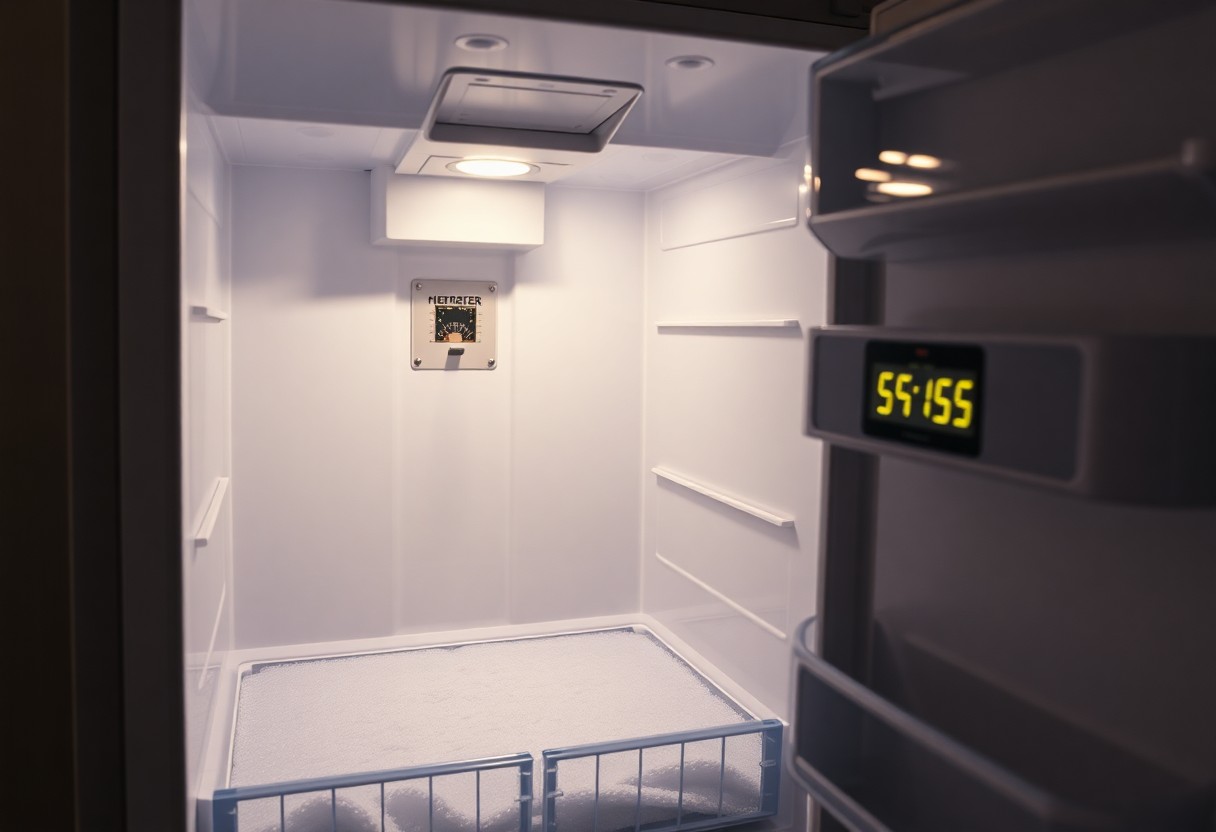
Constant operation of your fridge can indicate underlying issues that may impact its efficiency and your energy bills. You might notice it running non-stop, which could point to faulty door seals, clogged condenser coils, or problems with the thermostat. Addressing these issues promptly not only enhances your fridge’s performance but also prolongs its lifespan and avoids more expensive repairs. Understanding these factors is imperative for maintaining a reliable, energy-efficient appliance in your home.
Key Takeaways:
- Dirty condenser coils can obstruct heat dissipation, causing the fridge to run continuously.
- Faulty temperature settings or a malfunctioning thermostat may prevent the fridge from reaching the desired temperature.
- Door seals that are damaged or not sealing properly can lead to temperature fluctuations, forcing the fridge to work harder.
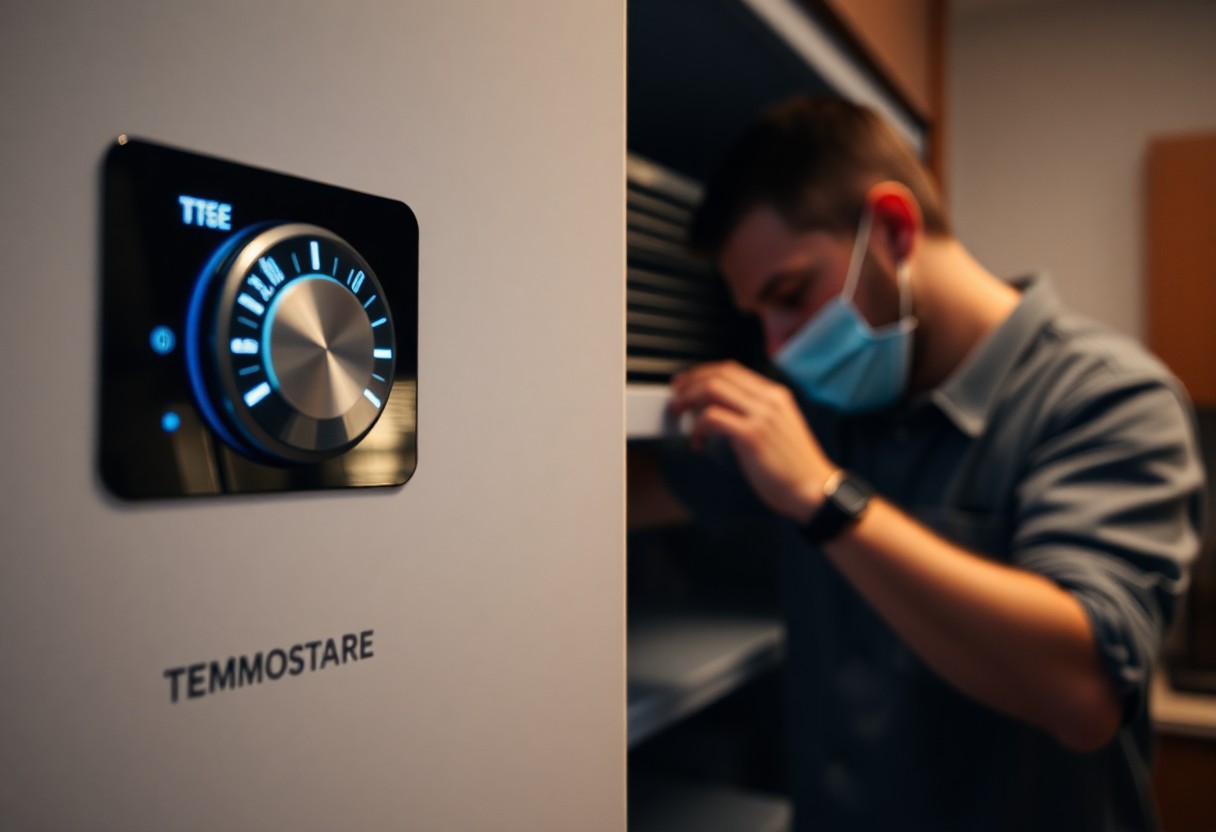
The Role of Thermostats in Refrigerator Functionality
Thermostats play a vital role in maintaining the temperature within your fridge, ensuring that your food stays fresh. They monitor the internal environment and signal the compressor to activate or deactivate, keeping the temperature within the optimal range. A malfunction here can lead to constant running or temperature fluctuations, which can spoil your groceries and increase energy bills.
How Thermostats Regulate Temperature
Your refrigerator’s thermostat uses a bimetallic strip or an electronic sensor to detect the internal temperature. When the temperature rises above your setpoint, the thermostat sends a signal to the compressor to start cooling. Once the desired temperature is reached, it tells the compressor to turn off. This cycle repeats, maintaining a stable environment for your food.
Signs of a Malfunctioning Thermostat
Common signs of a malfunctioning thermostat include erratic temperature readings, constant operation of the compressor, and an inability to maintain the set temperature. If you notice food spoilage or ice build-up, your thermostat may not be functioning correctly.
Inconsistent temperatures can be particularly alarming. If your refrigerator is overly cold, food may freeze unexpectedly, while an excessively warm interior can lead to rapid spoilage. This malfunction can strain the compressor, potentially leading to costly repairs and energy inefficiency. Regular monitoring of temperature and timely maintenance can help prevent these issues.
The Impact of Door Seals on Efficiency
Door seals are vital for your fridge’s efficiency, directly affecting its ability to maintain cold temperatures. A secure seal prevents warm air from entering, reducing strain on the compressor and conserving energy. If your fridge runs constantly, checking the condition of these seals is crucial, as damaged or worn seals can significantly increase energy costs and reduce food preservation quality.
Identifying Wear and Tear on Seals
Inspecting your fridge door seals for wear and tear should be a part of your regular maintenance routine. Look for cracks, tears, or signs of mold. An effective method to test the seal’s integrity is the paper test: close a piece of paper in the door and try to pull it out. If it slides out easily, the seals may be compromised and need replacement.
Consequences of Poor Sealing
Poor sealing around your fridge doors can lead to significant energy waste, affecting both your utility bills and the appliance’s lifespan. A poorly sealed fridge makes the compressor work overtime, leading to potential overheating and mechanical failures. This not only increases your energy expenses but can also compromise food safety, as temperatures fluctuate, allowing harmful bacteria to thrive.
With energy costs on the rise, the financial impact of poor sealing becomes even more pronounced. In fact, worn door seals can cause your refrigerator to use up to 25% more energy than one with intact seals. Moreover, frequent compressor cycling accelerates wear and increases maintenance needs. The resulting temperature fluctuations can lead to spoilage of food items, affecting both safety and quality. Addressing seal issues promptly can save you money and ensure a consistently safe environment for your food supplies.

Refrigerant Levels: The Silent Performance Killer
Low refrigerant levels can significantly hinder your fridge’s efficiency, causing it to run continuously without achieving the desired cooling effect. This often results from leaks or insufficient initial charging. When the refrigerant is depleted, the compressor is forced to work harder, leading to increased energy consumption and potential appliance damage. Addressing refrigerant issues promptly can prevent expensive repairs and prolong the lifespan of your refrigerator.
Recognizing Symptoms of Low Refrigerant
Signs of low refrigerant include the fridge running constantly, inconsistent temperatures between the fridge and freezer, and warm spots in your refrigerated items. In some cases, you might even hear strange noises from the compressor or notice frost buildup on evaporator coils. Timely recognition of these symptoms is important to avoid further complications.
Understanding the Refrigerant Cycle
The refrigerant cycle is the process through which heat is absorbed and released to maintain your fridge’s cooling ability. It involves the refrigerant transitioning between liquid and gas, primarily through evaporation and condensation, allowing for efficient temperature regulation within the appliance. Each phase plays a vital role in maintaining a consistent environment for your stored food.
During the refrigerant cycle, the refrigerant absorbs heat from inside your fridge as it evaporates in the evaporator coils, turning from liquid to gas. This gas then moves to the compressor, where it is pressurized and transformed back into a liquid after releasing absorbed heat outside through the condenser coils. This cycle repeats continuously, ensuring your fridge operates efficiently. Any disruption, such as low refrigerant levels, can lead to inadequate cooling and excessive energy use, emphasizing the need for routine maintenance and prompt repairs to uphold optimal refrigeration performance.
Cooling System Components: When Do They Fail?
Understanding the potential points of failure in your fridge’s cooling system components can help diagnose why it may run constantly. A malfunctioning part can lead to inefficient cooling, resulting in excessive energy consumption and eventual appliance burnout. Common issues can arise from damaged coils, compressors that struggle under pressure, or even faulty thermostats, each contributing to the overall performance and reliability of your refrigerator.
Damaged Condenser and Evaporator Coils
When condenser and evaporator coils become damaged or dirty, they can’t effectively transfer heat, causing your fridge to work overtime. A buildup of dust or grime can impair heat exchange, leading to inefficient cooling cycles and increased energy costs. If not addressed, this can lead to frost buildup and can result in more severe system failures.
The Importance of the Compressor
The compressor serves as the heart of your cooling system, responsible for circulating refrigerant through the coils. A failing compressor loses its ability to create the necessary pressure differential, disrupting the refrigeration cycle and causing your appliance to run continuously. This not only leads to higher energy consumption but also shortens the lifespan of your fridge, making timely maintenance or replacement a necessity for continued efficiency.
Without a properly functioning compressor, your refrigerator struggles to maintain the required internal temperatures. A typical compressor cycles on and off, maintaining an optimal temperature range; however, if it begins to overheat or fails to build up proper pressure, it can lead to constant running. In fact, continual operation can increase your energy bills by as much as 15-30%. Moreover, investing in a new compressor can be significantly more cost-effective than dealing with the consequences of a failed fridge. Proper diagnostics and timely repairs can ensure your refrigerator performs optimally, keeping your food fresh and your energy bills in check.
External Factors: The Environment’s Role
Various external factors can significantly impact your fridge’s performance. High ambient temperatures lead to increased workload, whereas humidity can affect the internal condensation, influencing cooling efficiency. Understanding these elements ensures you maintain optimal conditions for your appliance. Location and placement also play critical roles in how effectively your fridge operates.
- Ambient Temperature
- Humidity Levels
- Placement Near Heat Sources
- Airflow Restrictions
Any change in your fridge’s environment can alter its efficiency.
How Ambient Temperature Affects Performance
Extreme ambient temperatures can lead to increased energy consumption. When temperatures soar above 90°F, your fridge struggles to maintain internal cooling, pushing the compressor to work overtime. Conversely, excessively low temperatures below 32°F may affect thermostat accuracy. This inconsistency leads to poor temperature regulation, keeping your appliance running longer than necessary.
Temperature Impact on Fridge Efficiency
| Ambient Temperature | Fridge Performance |
|---|---|
| Above 90°F | Increased compressor load |
| Below 32°F | Potential thermostat issues |
Location and Placement Considerations
Where you place your fridge influences its efficiency. Installing it near a heat source, such as an oven or direct sunlight, can cause overheating, leading to increased energy usage. Adequate airflow around the appliance is necessary for proper ventilation; obstructed vents can cause the fridge to work harder to maintain temperature.
Placement also affects airflow and cooling performance. Ensure your fridge is at least a few inches away from walls or cabinets. Ideally, it should be positioned in a cooler area of the kitchen, where ambient temperatures are consistent and away from radiators or other heat-emitting devices. Proper placement can enhance your appliance’s longevity and efficiency, saving you money on electricity bills.
Final Words
Ultimately, if your fridge runs constantly without ever shutting off, it may be due to several factors including temperature settings, blocked vents, or malfunctioning components such as the thermostat or compressor. Ensuring proper airflow and maintaining the right temperature can help, but if the problem persists, consulting a professional is advisable to prevent energy wastage and potential damage to your appliance.
FAQ
Q: Why is my fridge running continuously?
A: Continuous running can be due to various factors, including a dirty condenser coil, which impairs heat dissipation, or a malfunctioning thermostat that fails to regulate the temperature properly.
Q: Could the door seal be causing my fridge to run constantly?
A: Yes, a compromised door seal can allow warm air to enter, forcing the fridge to work harder and run longer to maintain the desired temperature.
Q: Are there any issues with the defrost system that can affect fridge operation?
A: Problems with the defrost heater or defrost timer can lead to frost buildup on the evaporator coils, restricting airflow and causing the unit to run continuously.
Q: How does the ambient temperature affect fridge performance?
A: If the surrounding environment is too hot, the fridge will operate longer to counteract the increased temperature, resulting in constant running.
Q: Can a coolant leak make my fridge run non-stop?
A: Yes, a refrigerant leak reduces the system’s efficiency, forcing the fridge to run continuously in an attempt to maintain the set temperature.